

Is education meant to earn qualifications—or to understand the human person?
Years of Study—Deeper Understanding?
In Catholic seminaries, students spend many years studying theology, philosophy, Scripture, Church history, and related subjects. They may study for more than seven years and, after ordination, some continue their higher studies abroad. What is the real value of such a long education?
Knowledge matters. But just as important is how that knowledge helps a person understand himself. Should education not develop the ability to honestly examine one’s thoughts, beliefs, fears, ego, desire for authority, and self-interest?
From Knowledge to Wisdom
Philosophy should not end with memorizing the ideas of philosophers. It should cultivate the habit of asking: “Why do I believe this?” “What grounds my belief?” “Is my thinking guided by truth—or by habit, fear, or authority?” Theological education, too, should remain connected to the realities of human life.
When learners develop self-understanding, empathy for the suffering of others, and the willingness to question their own views, education begins to become wisdom. Otherwise, it may remain a process of accumulating information and qualifications.
Does Education Create Change—or Preserve the Existing Order?
When an educational institution protects established traditions, beliefs, and hierarchies without questioning them, it risks becoming less a place that encourages change and more an instrument for preserving the status quo. This is the concern:
“They are just maintaining the status quo!”
This is not a personal accusation against every priest. It is a call for the educational system to examine itself. It is reasonable to ask how much someone who has spent years studying, earned degrees, and pursued advanced education contributes to meaningful change in society.
An Education Detached from Ordinary People?
Education should touch the lives of ordinary people. How does what is learned help those facing poverty, unemployment, family struggles, emotional distress, social injustice, or violations of human rights? Does it teach future priests to speak in people’s language, understand their experiences, and seek solutions alongside them?
Knowledge that is disconnected from people’s lives may seem sophisticated, yet remain foreign to them. Education should not separate a person from the community; it should bring that person closer to it. Knowledge should become a tool for service, not a symbol of authority.
Where Is the Altruistic Purpose?
Should priestly education not be rooted in selfless service, human dignity, self-criticism, and the courage to seek truth? Education is not simply preparation for a position; it should prepare a person to make a meaningful contribution to the lives of others. Knowledge fulfils its purpose when it is used for people’s well-being—not merely to protect one’s comfort or authority.
Conclusion: Education Should Liberate the Human Person
The value of education cannot be measured only by degrees or years of study. Its true worth is reflected in intellectual honesty, humility, self-awareness, social concern, and the courage to bring about change. All education—including priestly formation—should remain close to the questions of human life, understand people’s suffering, and work with them toward a better society.
“Education does not elevate us merely by how much we learn, but by how meaningfully that learning transforms human lives.”
— S. M. Viswasam
ABOUT THE AUTHOR
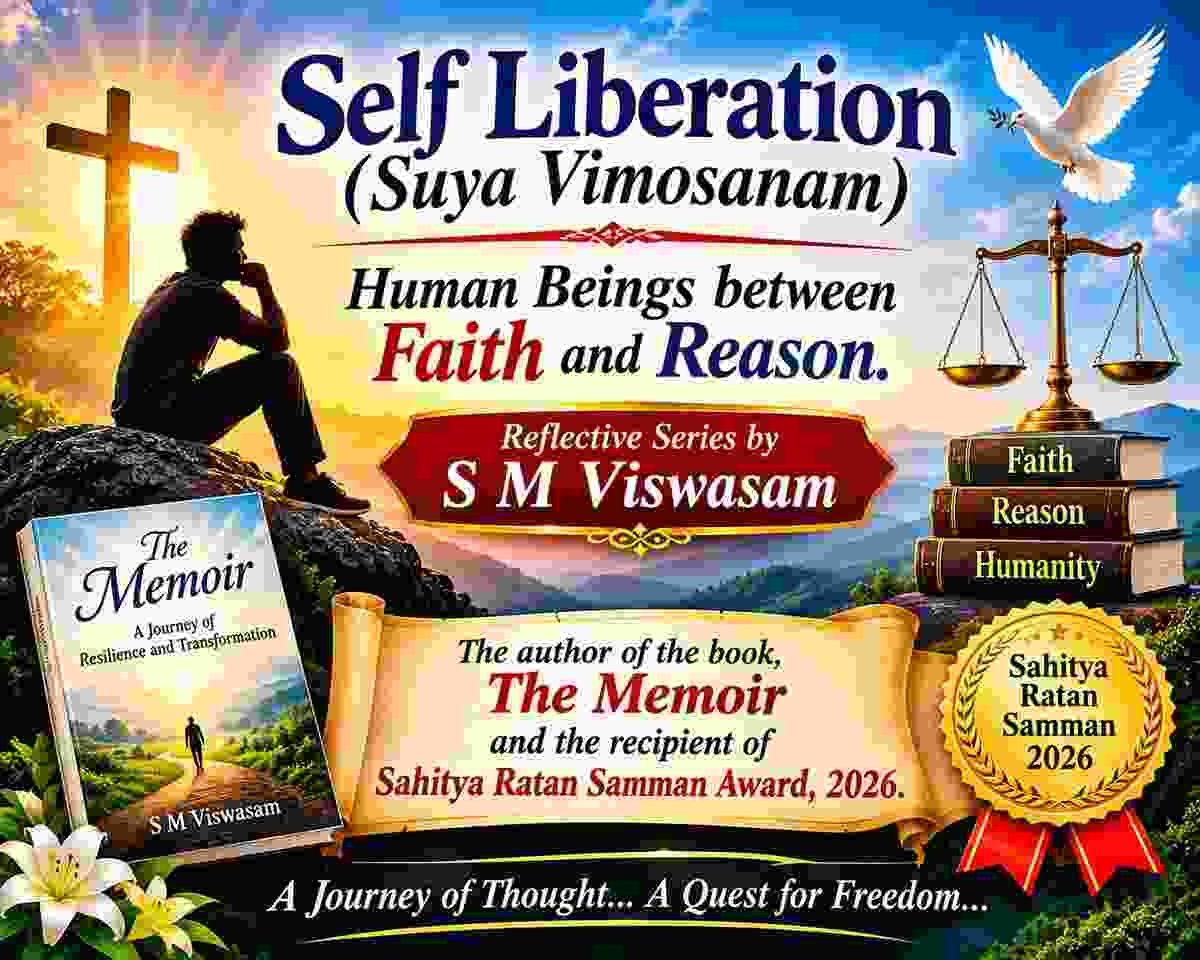
S. M. Viswasam is the author of The Memoir, which recently received the Sahitya Ratan Samman Award 2026. He writes from a reflective and human-centred perspective, exploring the intersections of faith, reason, education, and social life. His writing encourages thoughtful questioning, intellectual honesty, compassion, and personal freedom. Through essays in the series Self-Liberation: The Human Being Between Faith and Reason, he invites readers to examine inherited beliefs and institutions while keeping human dignity and everyday realities at the centre.


