

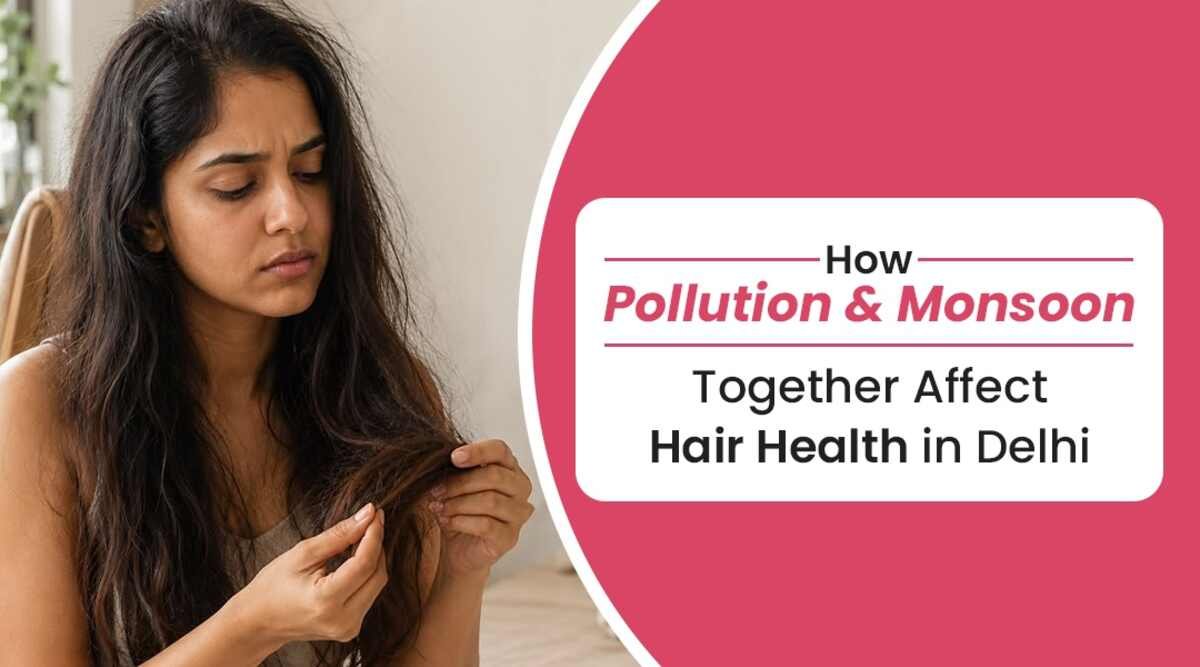
Delhi’s air and monsoon weather create a difficult combination for the scalp. Pollution settles on the hair during daily travel, while humidity keeps the scalp warm, sweaty, and oily for longer. The result can be an itchy scalp, dandruff, buildup, and more hair breakage.
For some people, these changes are temporary. For others, they can make an existing hair problem more noticeable. Dermatologists at Dermapuritys say it is important to look at both the scalp and the pattern of hair fall instead of blaming every change on the weather.
How Pollution Affects Hair?
Pollutants can settle directly on the scalp and hair shaft. Dust, smoke, and other particles can mix with natural scalp oil and sweat, leaving behind a layer of buildup.
The scalp may start feeling greasy or itchy. Hair can also look dull and feel rougher than usual.
People who spend several hours outdoors in Delhi are exposed to this buildup regularly. Leaving it on the scalp for long periods can make existing dandruff or scalp sensitivity harder to manage.
What Monsoon Adds?
Humidity changes the situation further. Sweat does not evaporate as quickly, so oil and moisture remain on the scalp for longer.
This can create a comfortable environment for microorganisms linked to dandruff and some scalp infections. People may notice more flakes, itching, or an unpleasant scalp odour.
Rain can add another layer of grime. Water picked up from the environment may come into contact with the hair, while wet hair is more fragile and easier to damage through rough brushing or towel drying.
Pollution and Humidity Can Increase Scalp Buildup
One of the biggest problems is buildup.
Oil, sweat, styling products, dead skin cells, and environmental particles can collect around the scalp. If the scalp is not cleansed properly, this buildup can make it feel heavy and uncomfortable.
Washing the hair more often does not mean using harsh shampoos every day. The right frequency depends on the scalp. Someone with an oily scalp may need more frequent cleansing, while a dry or sensitive scalp may need a gentler approach.
Hair Breakage Can Look Like Hair Fall
Not every strand found in the shower has fallen from the root.
Hair that becomes weak from repeated wetting, rough towel drying, heat styling, tight hairstyles, or frequent chemical treatments can break along the shaft. This makes the hair look thinner and shorter.
Pollution and humidity do not directly cause every case of hair loss. They can, however, make the scalp uncomfortable and contribute to conditions that affect hair quality.
A widening part, receding hairline, thinning crown, or continued shedding is a different concern and needs proper assessment.
Simple Hair Care for Delhi Monsoon
A few practical changes can help.
Wash the scalp when it becomes sweaty or oily. Rinse the hair after getting caught in the rain if there is visible dirt or buildup. Dry the scalp properly instead of leaving it damp for hours.
Use a shampoo suited to your scalp and avoid aggressive scrubbing. A clean pillowcase and regularly washed combs and brushes can also help reduce buildup.
Try to limit heavy styling products when the scalp is already oily. Tight hairstyles should also be avoided if the hair is wet or already fragile.
Nutrition matters too. A balanced diet with enough protein, iron, vitamins, and other nutrients supports normal hair growth. Supplements should not be started randomly, especially when the reason for hair fall is unclear.
When Hair Fall Needs a Dermatologist
It is normal to lose some hair every day. The concern is persistent or visible change.
If hair fall continues for several weeks, the scalp becomes increasingly visible, or the hairline starts receding, it is worth getting an assessment. Persistent dandruff, redness, itching, painful bumps, or sudden heavy shedding also deserve attention.
People who have been dealing with hair fall for months should not keep switching oils, shampoos, and supplements without finding the cause. Genetics, hormonal changes, nutritional deficiencies, stress, medications, and scalp conditions can all contribute to hair loss.
Treatment Depends on the Cause
Hair problems linked to pollution and humidity do not always require a hair restoration procedure. Sometimes the main issue is scalp health. In other cases, there may be an underlying hair-loss condition that needs medical treatment.
Dermatologists at Dermapuritys assess the scalp, hair density, pattern of thinning, and history of hair loss before recommending treatment. Depending on the diagnosis, options may include medical hair-loss management, scalp treatments, PRP or GFC therapy, or hair restoration procedures.
The important part is identifying the problem first.
Give Your Hair a Better Monsoon Routine
Delhi’s pollution cannot be avoided completely, and neither can humidity during the rainy season. But the way the scalp is cared for can make a difference.
Keep the scalp clean without over-washing it. Do not leave wet hair tied for long periods. Pay attention to persistent dandruff and avoid treating ongoing hair loss as a temporary seasonal issue.
If hair fall has been going on for a long time, keeps returning every monsoon, or comes with visible thinning, consulting a dermatologist at Dermapuritys can help identify what is actually happening. Treating the scalp early and addressing the real cause of hair loss can help protect hair health in the long run.


